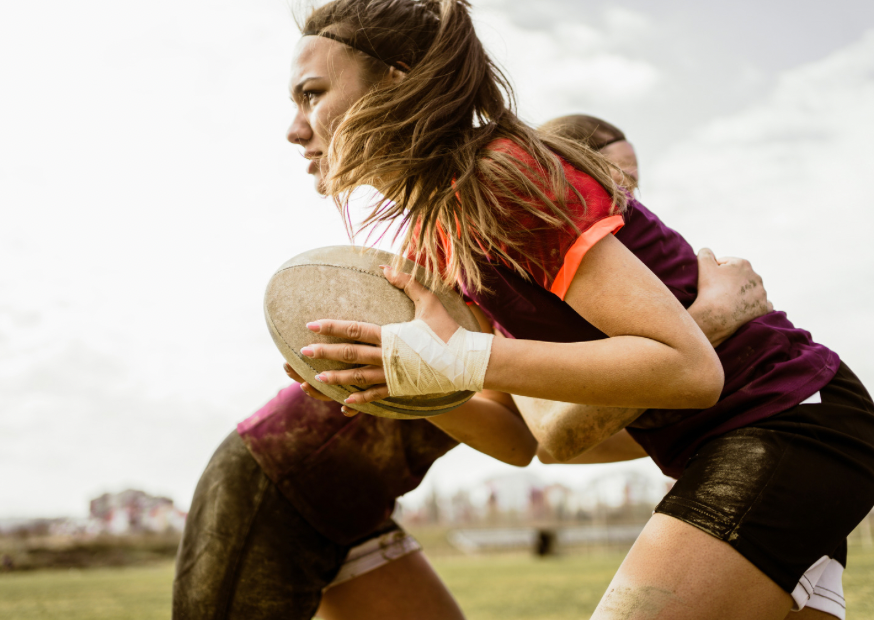
Yoga for Rugby Players: Why Your Position Matters
Rugby is a game of strength, speed, power, endurance, agility and, of course, contact.
But there is another interesting aspect of rugby that is sometimes overlooked when we talk about training and recovery:
Not every rugby player uses their body in the same way.
A prop, a scrum-half and a winger may all play rugby, but the physical demands placed on them can be very different.
Forwards generally spend more time involved in high-intensity static efforts such as scrums, rucks and mauls, while backs typically have greater demands for high-speed running. These differences can also influence fatigue and injury patterns. (PubMed Central (PMC))
So when we talk about yoga for rugby players, perhaps the better question isn’t simply:
“Which yoga poses are good for rugby?”
It is:
“What does your position ask of your body – and how could yoga complement your training and recovery?”
Rugby isn’t just one physical demand
Rugby Union requires a mixture of physical qualities.
- You need strength to tackle, carry and compete at the breakdown.
- Power to accelerate, jump and change direction.
- Speed to exploit space or chase down an opponent.
- Mobility to move efficiently through different positions.
- Balance and coordination to control your body at speed.
- And resilience to repeatedly absorb and produce force.
- Your training will therefore usually reflect your position.
Forwards tend to place greater emphasis on strength, power and contact preparation, while backs generally have greater demands for speed, agility and high-speed running. Research into rugby performance and recovery has consistently demonstrated these differences. (PubMed Central (PMC))
That matters when thinking about recovery too. Because sometimes the thing your body needs most isn’t more training. It may be better movement, mobility, breathing, recovery and the opportunity to down-regulate. And this is where yoga can have a useful supporting role.
Don’t underestimate restorative yoga
There is one style of yoga that athletes may be particularly likely to overlook: Restorative yoga.
And I can understand why. Rugby is competitive. You train to get stronger, faster and fitter. You measure your performance. You push yourself. You compete with the opposition and often with yourself. So a slow yoga practice where you spend several minutes supported by cushions and props, with very little movement, can initially seem a little… well, pointless. But perhaps that’s exactly why it can be useful.
Restorative yoga isn’t trying to give your body another training stimulus. It’s about giving your body permission to stop. Recovery doesn’t always mean doing more. Athletes can become very good at pushing themselves. But recovery is part of training too. Your body needs periods where it isn’t being asked to produce more force, more speed or more effort.
Restorative yoga uses props such as bolsters, blankets and blocks to support the body in comfortable positions. Rather than actively stretching or working towards a deeper posture, you are encouraged to settle, breathe and stay for longer.
There is no competition.
- No score.
- No personal best.
- Nothing to achieve.
- And for someone who is used to constantly asking their body to do more, that can feel surprisingly unfamiliar.
- A different type of training for the nervous system
Rugby involves repeated bursts of intensity. Sprint. Tackle. Collide. Accelerate. Decelerate. React. Then do it again.
Even strength and conditioning sessions place significant demands on the body. Restorative yoga provides a very different experience. The emphasis is on stillness, comfortable breathing and reducing unnecessary muscular effort. This can make it a useful practice to include alongside more physically demanding training, particularly during periods when recovery is a priority. It isn’t about making you softer or less competitive. It’s about recognising that your body can’t stay in performance mode all the time.
Recent research into recovery in elite rugby also highlights the importance of considering the different physical demands placed on players and the need for recovery approaches to be appropriately individualised. (PubMed Central (PMC))
Why might an athlete need it?
Consider how much time a rugby player can spend deliberately creating tension. Bracing the core. Gripping. Pushing. Driving. Lifting. Stabilising. Producing force.
Restorative yoga asks almost the opposite question: “What can you let go of?”
- Rather than strengthening a muscle, can you allow it to soften?
- Rather than trying to increase your range of movement, can you find a position where your body feels supported?
- Rather than concentrating on your next repetition, can you simply breathe?
- That can provide a valuable contrast to the rest of an athlete’s training week.
Restorative doesn’t mean easy. This is worth saying because “restorative” can sometimes be interpreted as meaning that it isn’t really doing anything. It can actually be surprisingly challenging for athletes to slow down. If you’re used to being active, lying still for several minutes can feel uncomfortable. You may notice how much you’re holding in your shoulders. How quickly your mind wants to move on. How difficult it is not to fidget. Or how accustomed you are to always having something to work towards. That’s part of the practice.
Rest isn’t something you have to earn by exhausting yourself first. And learning to rest can be a skill in itself.
When might restorative yoga be useful?
It can be particularly appropriate during recovery periods, after demanding training blocks, during a lighter training week or simply when an athlete feels that they need to step away from another high-intensity session.
It can also work alongside more active yoga.
For example, a rugby player might use a more dynamic mobility-based practice earlier in the week, while choosing restorative yoga after a particularly demanding session or towards the end of the training week.
The practice doesn’t have to be long either.
Even a short period of supported, quiet movement and breathing can provide a very different experience from the rest of a rugby player’s training.
And this brings us back to position…
Because once we recognise that rugby players have different physical demands, recovery needs can differ too.
A prop dealing with heavy strength and contact training may need something different from a winger who has accumulated large amounts of high-speed running.
A scrum-half may have different areas of muscular tension from a lock.
And a player returning from injury will have different needs again.
So, what does your position ask of your body?
Forwards: strength, power and contact
Let’s start with the forwards.
Props
Props spend a considerable amount of time dealing with force. Scrums, tackles, rucks, mauls and carries all place substantial demands on the body, particularly the neck, shoulders, upper back, hips and legs. Their gym training is often heavily strength-focused, with considerable work for the lower body, posterior chain and upper body. For a prop, yoga doesn’t need to be about becoming extremely flexible. In fact, more flexibility isn’t necessarily the goal.
Instead, useful areas to explore may include:
- thoracic spine mobility
- shoulder mobility
- hip mobility
- ankle mobility
- gentle movement through the neck and upper back
- hamstring and calf mobility
- breathing and relaxation following heavy training
Think mobility rather than forcing range.
Yoga may provide an opportunity to move through ranges that aren’t necessarily emphasised during strength and contact training, while also giving the nervous system a chance to shift away from constant high-intensity work.
Hookers
Hookers have some of the demands of the front row but also need considerable mobility and coordination. They are involved in scrums and contact but may also need to move quickly around the pitch. Their bodies can therefore experience a mixture of heavy strength work, repetitive contact and dynamic movement.
For a hooker, I might particularly consider:
hips + ankles + thoracic spine + shoulders
as areas worth giving attention to. Yoga movements such as controlled lunges, squats, twists, shoulder mobility and gentle spinal movement can complement their existing training.
Locks
Locks have a particularly interesting combination of requirements. They need strength and power but also jumping ability, coordination and mobility. The hips, ankles, thoracic spine and shoulders can all be important when repeatedly jumping, landing, lifting and competing in the lineout. Yoga could therefore be useful for maintaining comfortable movement through these areas, particularly after heavy lower-body and strength sessions.
The back row: power, movement and endurance
Flankers and number eights sit somewhere between the traditional forward and back demands.
They need strength for contact but also the ability to move around the pitch repeatedly.
Loose forwards can have substantial running demands compared with other forwards, alongside the physical demands of tackles, rucks and other contact situations. (PubMed Central (PMC))
They may benefit from yoga that combines:
- hip mobility
- hamstring and calf mobility
- ankle mobility
- rotational movement
- balance
- single-leg control
- recovery-focused movement
This is an area where yoga can complement strength and conditioning particularly well. Rather than simply stretching after training, a rugby-specific yoga session could include controlled mobility and movement through the ranges the player actually uses.
Scrum-halves: big workload
Then we get to the backs. And perhaps one of the most interesting positions from a movement perspective is the scrum-half. Scrum-halves need to be constantly involved in the game. They accelerate, decelerate, change direction, pass, kick, tackle and repeatedly move between low and upright positions. They need mobility, agility, speed and coordination.
For a scrum-half, yoga might focus on:
hips + hamstrings + calves + ankles + thoracic spine + shoulders
but also on balance and controlled movement.
There is another reason mobility matters here. Being able to access a position is one thing. Being able to control that position is another. Yoga can be particularly useful when it is approached as active, controlled movement rather than simply holding passive stretches.
Fly-halves and centres: speed, rotation and change of direction
Fly-halves and centres need a combination of speed, agility, kicking, passing and contact ability.
There can be considerable demands on the hips and legs from acceleration, deceleration and changes of direction.
The hamstrings are particularly relevant in rugby. Hamstring strain injuries are among the more common injuries in Rugby Union, and research has identified playing position, fatigue, previous injury, strength imbalances, readiness to return to play and running actions as factors associated with hamstring injury. (PubMed) Research has also found higher hamstring strain incidence among backs than forwards. (British Journal of Sports Medicine)
This doesn’t mean:
“Stretch your hamstrings and you won’t get injured.”
Injury prevention is much more complicated than that. Strength, conditioning, workload management, previous injury, fatigue and adequate rehabilitation all matter. But maintaining appropriate mobility and learning to move well can still be a useful part of the bigger picture.
For these players, yoga might therefore include:
- dynamic hamstring movements
- hip mobility
- calf and ankle mobility
- controlled rotation
- balance work
- single-leg movement
- recovery-focused sequences
Wingers and full-backs: speed comes at a cost
Wingers and full-backs can have some of the greatest demands for high-speed running. They need to accelerate quickly, reach high speeds, change direction and often tackle or be tackled at speed.
Research consistently identifies greater high-speed running demands among backs, while positional research also shows differences in injury location and type between forwards and backs. (PubMed Central (PMC))
For these players, the lower body deserves plenty of attention.
Particularly: hamstrings, calves, ankles, hips. glutes
But again, the answer isn’t simply to stretch everything. A yoga practice for a winger might instead combine mobility with strength, control, balance and proprioception.
For example, a single-leg balance isn’t just a flexibility exercise.
It asks:
- Can you stabilise?
- Can you control your ankle?
- Can you maintain your hip position?
- Can you breathe while balancing?
- Can you control your movement rather than simply reaching further?
That is much closer to the demands of sport.
What about rugby injuries?
Rugby is, inevitably, a contact sport.
A large 2025 systematic review and meta-analysis found that injury patterns differ between forwards and backs. In Rugby Union, forwards had a slightly higher overall injury incidence, while backs had more strain injuries and injuries associated with tackling, running and collision. The review also found differences in injury location, with forwards showing higher rates of some head, arm/elbow, trunk/back and calf injuries, while backs had higher rates of lower-limb and thigh injuries. (PubMed Central (PMC))
This is one reason a one-size-fits-all approach to athletic recovery doesn’t always make sense. Your position. Your training. Your previous injuries. Your age. Your workload. Your individual movement patterns. They all matter.
So where does yoga fit?
Yoga isn’t a replacement for strength and conditioning. It isn’t a replacement for appropriate rehabilitation. And it certainly isn’t a guarantee against injury. But it can sit alongside these things. For a rugby player, yoga can provide an opportunity to work on areas such as:
Mobility - Maintaining comfortable movement through the hips, ankles, shoulders and spine.
Balance and proprioception - Developing awareness of where your body is in space and improving controlled movement.
Movement control - Learning to move slowly and deliberately can complement the explosive movements required in rugby.
Breathing - Breath-focused practices can provide a useful contrast to the high-intensity nature of rugby and may help create a transition between training and recovery.
Recovery - A slower yoga session can provide an opportunity to move without adding another high-intensity training stimulus.
Body awareness - Perhaps one of the most underrated benefits. Yoga asks you to pay attention.
- Where are you holding tension?
- Does one side feel different from the other?
- Can you move into a position comfortably?
- Are you compensating somewhere else?
For an athlete, that awareness can be valuable.
The best yoga for a rugby player isn’t necessarily the hardest yoga
There can sometimes be a misconception that athletes need to do an intense yoga class to get the most from it.
I’m not convinced. If you’ve just completed a heavy strength session, sprint training or a hard rugby match, adding another physically demanding workout may not be what your body needs. Sometimes a slower session may be more appropriate. Other times, a more dynamic mobility-focused session could complement training. Yoga can be adapted to the athlete rather than the athlete having to fit into one particular style of yoga. And that is particularly relevant in rugby. A prop may need something different from a winger. A player returning from injury will need something different from a fully fit player. And what you need during pre-season may be very different from what you need during a congested run of fixtures.
Yoga for rugby: think position, not just sport
Perhaps this is the biggest takeaway. When we say “yoga for rugby players”, we’re still making a fairly broad assumption. Rugby players aren’t all the same. A front-row forward has different physical demands from a back. A winger has different running demands from a prop. And even two players in the same position may have completely different needs depending on their training history, injury history, mobility and individual movement patterns.
So rather than asking:
“What yoga should rugby players do?”
I’d ask:
“What does this particular rugby player need?”
That might be mobility.
It might be controlled strength.
It might be balance.
It might be recovery.
It might be breathing.
Or it might simply be 60 minutes where nobody is asking them to run, lift, tackle or sprint!
And perhaps the most useful yoga practice for an athlete is one that helps them understand their body a little better and gives it something it isn’t already getting from their sport.
A final thought for rugby players
Your sport already asks your body to produce a lot.
- Run faster.
- Lift heavier.
- Tackle harder.
- Change direction.
- Absorb impact.
- Recover.
- Then do it again.
Yoga offers something different.
Move. Breathe. Notice. Recover.
And sometimes doing something different is exactly what your body needs.
Ready to Take Your Ruby Further?
I offer private and group Yoga for Athletes sessions in Exeter, Exminster, and Topsham, designed to support active people who want to move well, recover effectively, and enjoy their sport for years to come. Find out more here
References
Chavarro-Nieto, C., Beaven, M., Gill, N. & Hébert-Losier, K. (2021).
Hamstrings injury incidence, risk factors, and prevention in Rugby Union players: a systematic review. The Physician and Sportsmedicine, 51(1), 1–19.
Vaajala, M. et al. (2025).
Differences in Injury Incidence Between Player Positions Across All Rugby Formats – A Systematic Review and Meta-Analysis. Scandinavian Journal of Medicine & Science in Sports.
Laaksonen, M. et al. (2025/2026).
Epidemiology of rugby injuries: a systematic review and meta-analysis. British Journal of Sports Medicine.
Brooks, J. H. M. et al.
Incidence and characteristics of injuries in professional rugby union. Research examining injury patterns and positional differences in professional Rugby Union.
Topics included
- yoga for rugby players
- rugby and yoga
- rugby player recovery
- yoga for athletes
- rugby positions and physical demands
- forwards vs backs
- rugby injury patterns
- rugby mobility
- hamstring injuries in rugby
- yoga for flexibility and mobility
- yoga for sports recovery
- position-specific training
- yoga and athletic performance

Yoga classes in Exeter, book here
My yoga classes run in themes for five weeks. This allows for people to put in place adaptions to suit their body and learn the different options of each yoga flow that are right for them. After the five weeks you will find each yoga flow published on my blog, with a free interactive copy. You will find the yoga class for this theme below.
Want to try one of my yoga classes?
I run yoga classes in Exeter- Exminster & Topsham, Devon
My Exeter based yoga classes are suitable for most levels of yogis. There are flowing sequences, often using sun salutations and vinyasa to warm the body and move through the yoga postures.
The yoga classes include an element of all styles of yoga, to bring a fresh angle to yoga and will encourage the use of yoga props in a fun and informal environment to help you explore your practice. My styles include Hatha Yoga, Vinyasa Yoga, Flow Yoga, Yin Yoga & Restorative Yoga.
Variations to yoga postures will be given throughout the class allowing each person to adapt the class to their personal level of yoga practice. All equipment is provided.
Classes are available at Kiva & Zen Studios in Topsham, Exeter, Victory Hall in Exminster, Exeter.
Book a yoga class today and immerse yourself in the tranquil atmosphere of my Exeter yoga venues, while rejuvenating your mind and body through the practice of yoga.
Each session is designed to help you connect with your inner self, cultivate mindfulness, and improve flexibility, strength, and balance. Whether you're a beginner to yoga or an experienced practitioner, there's a class for you in my Exeter venues.
As a Yoga Teacher, I underwent my initial yoga training in India and am both qualified and registered with the Yoga Alliance. Since completing my initial yoga qualification, I have undertaken further yoga studies both here in Exeter and in locations around Europe.
Book your yoga classes in Exeter