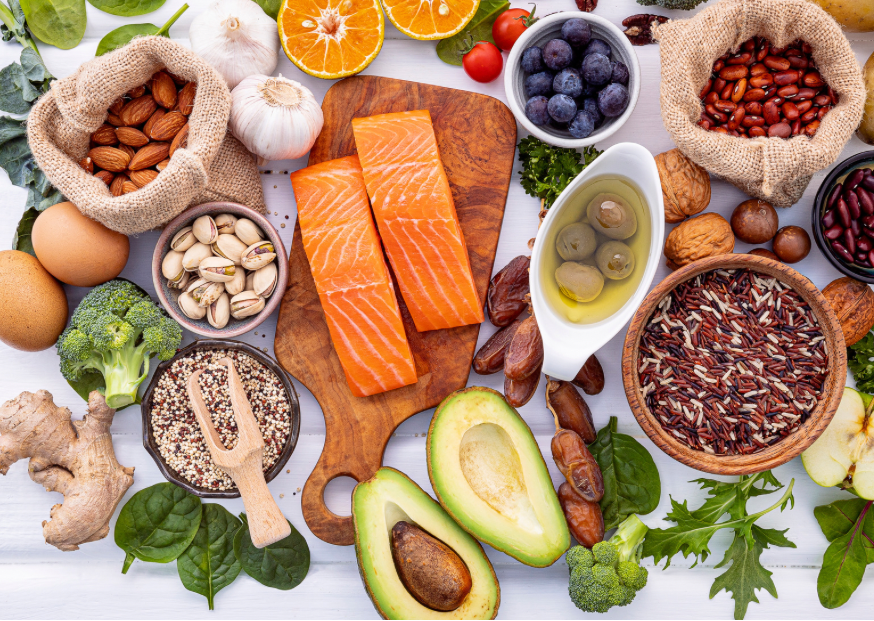
The Mediterranean Diet: Eating for Health and a Healthier Inflammatory Balance
The Mediterranean diet is often described as one of the healthiest ways of eating but it isn’t really a “diet” in the traditional sense.
It isn’t about counting calories, cutting out food groups or following a strict meal plan. Instead, it is a pattern of eating based around plenty of vegetables, fruit, pulses, wholegrains, fish, nuts, seeds and extra virgin olive oil, with smaller amounts of meat, particularly red and processed meat.
It is also about choosing foods that are minimally processed, using herbs and spices for flavour, and enjoying food in a balanced and sustainable way.
There is good evidence linking a Mediterranean-style dietary pattern with a range of health benefits, particularly cardiovascular health. Research also suggests that it can help support a healthier inflammatory balance within the body.
So, what does following a Mediterranean-style diet actually look like?
What is the Mediterranean diet?
There isn’t one single Mediterranean diet.
Traditional diets vary between countries and regions around the Mediterranean, but they share some common characteristics.
The emphasis is on:
- Vegetables and salads
- Fruit
- Pulses such as lentils, chickpeas and beans
- Wholegrains
- Nuts and seeds
- Extra virgin olive oil
- Fish and seafood
- Herbs, spices, garlic and other flavourful plant foods
- Moderate amounts of eggs, poultry and dairy
- Smaller amounts of red meat
- Very little processed meat and ultra-processed food
The pattern is predominantly plant-based, but it isn’t necessarily vegetarian or vegan.
And importantly, Mediterranean-style eating doesn’t mean you need to eat Mediterranean recipes every day.
Think Mediterranean-inspired rather than Mediterranean-perfect.
Vegetables: the foundation of the diet
Vegetables form a large part of a Mediterranean-style diet.
Aim for plenty of variety rather than eating the same few vegetables repeatedly. Different coloured vegetables provide different combinations of vitamins, minerals and plant compounds called phytonutrients.
Try including:
- Leafy greens
- Broccoli and other cruciferous vegetables
- Peppers
- Tomatoes
- Courgettes
- Aubergines
- Carrots
- Beetroot
- Onions and garlic
- Mushrooms
- Green beans
- Cabbage
- Seasonal vegetables
Fresh, frozen and tinned vegetables can all contribute.
A useful approach is to ask yourself:
“How many different plants can I include this week?”
Rather than simply focusing on eating more food, increasing plant variety can be a practical way of improving the nutritional quality of your diet.
Fruit provides fibre and protective plant compounds
Fruit is another regular feature of the Mediterranean diet.
Rather than avoiding fruit because of its naturally occurring sugars, consider the whole food and what comes with it — fibre, vitamins, minerals and a wide range of polyphenols and other plant compounds.
Good choices include:
- Berries
- Apples
- Pears
- Oranges and other citrus fruits
- Kiwi
- Plums
- Peaches
- Grapes
- Pomegranate
Whole fruit is generally preferable to fruit juice, as it provides fibre and takes longer to consume.
Don’t forget pulses
Pulses are a particularly useful part of Mediterranean-style eating.
These include:
- Lentils
- Chickpeas
- Kidney beans
- Cannellini beans
- Butter beans
- Black beans
- Peas
They provide fibre, plant protein, minerals and a variety of other nutrients.
Try adding lentils to soups and stews, chickpeas to salads, or beans to tomato-based dishes.
If you currently eat very few pulses, introduce them gradually if your digestion is sensitive.
Choose wholegrains more often
The Mediterranean pattern generally favours wholegrains and less-refined carbohydrate sources.
Examples include:
- Oats
- Wholegrain bread
- Brown rice
- Quinoa
- Barley
- Wholewheat pasta
- Bulgur wheat
- Rye
Wholegrains retain more of the grain than refined versions and can provide more fibre and micronutrients.
You don’t have to completely eliminate white bread, pasta or rice. Instead, consider where you can gradually replace some refined carbohydrates with wholegrain or less-refined alternatives.
Extra virgin olive oil
Extra virgin olive oil is one of the characteristic foods of the Mediterranean dietary pattern.
It provides predominantly monounsaturated fat as well as a range of bioactive compounds, including polyphenols.
Use it:
- As a salad dressing
- Drizzled over vegetables
- In homemade dressings
- For cooking where appropriate
- As an alternative to butter in some meals
Look for extra virgin olive oil rather than simply “olive oil”, as these are not interchangeable in terms of processing and composition.
Fish and seafood
Fish and seafood are important protein sources within the Mediterranean diet.
Oily fish such as:
- Salmon
- Sardines
- Mackerel
- Herring
- Trout
provide the long-chain omega-3 fatty acids EPA and DHA.
Omega-3 fats are involved in regulating inflammatory processes and are particularly interesting when considering the relationship between diet and inflammation.
Aim to include fish regularly, with some of this being oily fish.
For people who don’t eat fish, plant sources such as flaxseed, chia seeds and walnuts provide alpha-linolenic acid (ALA), although ALA is converted to EPA and DHA only to a limited extent.
Nuts and seeds
Nuts and seeds provide healthy fats, fibre, protein and a range of micronutrients.
Try adding:
- Almonds
- Walnuts
- Hazelnuts
- Pistachios
- Pumpkin seeds
- Sunflower seeds
- Chia seeds
- Flaxseeds
They make a useful snack or can be added to porridge, yoghurt, salads and vegetables.
Because they are energy-dense, a small handful is usually plenty.
What about meat, eggs and dairy?
A Mediterranean-style diet doesn’t mean eliminating animal foods.
Eggs, poultry and dairy can all be included, depending on your individual dietary preferences and needs.
Natural yoghurt and other minimally processed dairy foods can provide protein and calcium.
The main difference is that meat tends to play a smaller role than it does in a typical Western diet.
In particular, it is sensible to minimise processed meats such as sausages, bacon, salami and other cured meats.
Red meat doesn’t necessarily need to disappear completely, but it can be eaten less frequently and in smaller portions, with fish, pulses and other protein sources making up more of the diet.
Herbs and spices are part of the picture too
Mediterranean cooking isn’t dependent on large amounts of salt, sugar or heavily processed sauces for flavour.
Instead, meals can be made interesting with:
- Garlic
- Basil
- Oregano
- Rosemary
- Thyme
- Parsley
- Mint
- Turmeric
- Cumin
- Paprika
- Black pepper
- Lemon
These foods also provide a variety of plant compounds, so herbs and spices are a simple way to add flavour and nutritional variety.
What about inflammation?
Inflammation is not automatically a bad thing.
It is an important part of the body’s normal immune and repair processes. Problems can arise when inflammatory processes become persistent or poorly regulated.
Diet is only one factor involved in inflammation. Sleep, stress, physical activity, body composition, smoking, alcohol, environmental exposures and underlying health conditions can all play a role.
However, the Mediterranean dietary pattern has attracted considerable interest because it combines a number of dietary features that may support a healthier inflammatory balance.
Recent research, including a 2026 systematic review and meta-analysis of randomised controlled trials, found that Mediterranean-style dietary interventions were associated with reductions in some inflammatory markers, including hs-CRP, IL-6 and IL-17. However, not every inflammatory marker was significantly affected, so it is more accurate to say that the Mediterranean diet can support a healthier inflammatory response rather than describing it simply as an “anti-inflammatory diet”.
Polyphenols and antioxidants
Vegetables, fruit, extra virgin olive oil, herbs, spices, nuts and wholegrains provide a wide range of polyphenols and other plant compounds.
These compounds can interact with several biological pathways involved in oxidative stress and inflammation.
This is one reason why variety matters.
Rather than looking for one “superfood”, the Mediterranean approach provides a broad range of plant compounds from many different foods.
Omega-3 fats
Oily fish provide EPA and DHA, long-chain omega-3 fatty acids involved in the regulation and resolution of inflammatory processes.
This is one reason fish, particularly oily fish, features regularly within the traditional Mediterranean dietary pattern.
Fibre and the gut microbiome
The Mediterranean diet is naturally rich in fibre from vegetables, fruit, pulses, wholegrains, nuts and seeds.
Fibre provides an important fuel source for many gut bacteria. When certain types of fibre are fermented by gut microbes, they can produce short-chain fatty acids such as butyrate.
The gut microbiome is a complex area of research, and studies looking specifically at the Mediterranean diet have produced mixed results. Some research suggests beneficial changes in microbial diversity and composition, while other studies have found less consistent effects.
So rather than claiming that the Mediterranean diet will automatically “fix your gut microbiome”, it is more accurate to say that its high intake of diverse plant foods and fibre provides a supportive environment for a healthy gut ecosystem.
Blood sugar and metabolic health
Another important feature is the combination of fibre, protein and healthy fats.
Meals containing vegetables, pulses, wholegrains, protein and healthy fats tend to be more satisfying and can help support steadier blood glucose levels compared with meals dominated by refined carbohydrates and added sugars.
Maintaining good metabolic health is also relevant when considering chronic inflammation, as metabolic dysfunction and inflammation are closely interconnected.
Building a Mediterranean-style plate
You don’t need to calculate exactly how much of every food group you should eat.
A simple starting point is:
½ plate — vegetables or salad
Think variety and colour.
¼ plate — protein
For example, fish, chicken, eggs, lentils, chickpeas, beans or tofu.
¼ plate — wholegrain or minimally processed carbohydrate
For example, brown rice, quinoa, wholegrain pasta, potatoes, barley or wholegrain bread.
Then add some healthy fat, such as extra virgin olive oil, nuts or seeds, and flavour with herbs and spices.
This isn’t a rigid formula. Your individual requirements may mean that the proportions need to change.
What might a Mediterranean-style day look like?
Breakfast
Porridge made with oats, topped with:
- Berries
- Chia or ground flaxseed
- Walnuts
- Natural yoghurt
Lunch
A large salad containing:
- Chickpeas
- Tomatoes
- Cucumber
- Peppers
- Leafy greens
- Olives
- Feta, if tolerated
- Extra virgin olive oil and lemon dressing
With a slice of wholegrain bread.
Snack
An apple with a small handful of almonds.
Dinner
Oven-baked salmon with:
- Roasted courgettes and peppers
- Broccoli
- Quinoa or new potatoes
- Green salad
- Extra virgin olive oil and herbs
And what about treats?
There is still room for enjoyment.
The Mediterranean pattern isn’t about perfection. A piece of dark chocolate, a homemade dessert or a meal out can all fit within an overall healthy dietary pattern.
The important thing is what you do most of the time, rather than trying to eat perfectly.
What foods should you reduce?
Rather than creating a long list of “forbidden” foods, think about what you could eat less often.
This might include:
- Processed meats
- Large amounts of red meat
- Ultra-processed foods
- Refined carbohydrates
- Foods high in added sugars
- Deep-fried foods
- Highly processed snacks
- Foods high in saturated fat when eaten frequently
Alcohol is not an essential part of the Mediterranean diet, despite the way it is sometimes portrayed. You don’t need to drink wine to follow a Mediterranean-style diet.
A simple Mediterranean shopping list
Vegetables
- Broccoli
- Peppers
- Tomatoes
- Courgettes
- Aubergines
- Carrots
- Leafy greens
- Onions
- Garlic
- Green beans
- Seasonal vegetables
Fruit
- Berries
- Apples
- Pears
- Citrus fruit
- Kiwi
- Grapes
- Seasonal fruit
Protein
- Salmon
- Sardines
- Mackerel
- Other fish
- Eggs
- Chicken
- Lentils
- Chickpeas
- Beans
- Natural yoghurt
Wholegrains
- Oats
- Brown rice
- Quinoa
- Barley
- Wholegrain bread
- Wholewheat pasta
Healthy fats
- Extra virgin olive oil
- Walnuts
- Almonds
- Pumpkin seeds
- Chia seeds
- Flaxseeds
Flavour
- Garlic
- Fresh herbs
- Dried herbs
- Spices
- Lemons
Store-cupboard staples
- Tinned tomatoes
- Tinned beans
- Tinned chickpeas
- Lentils
- Wholegrain pasta
- Extra virgin olive oil
- Herbs and spices
Frozen vegetables and fish can also be useful and are often an economical way to keep nutritious ingredients available.
You don’t need to change everything at once
If your current diet looks very different from this, don’t feel that you need to completely overhaul it overnight.
Small changes can add up.
You could start by:
Week 1: Add an extra portion of vegetables to your main meal.
Week 2: Have a meat-free meal once or twice a week using lentils, beans or chickpeas.
Week 3: Add nuts or seeds to breakfast.
Week 4: Swap one refined carbohydrate for a wholegrain alternative.
Week 5: Introduce oily fish if you don’t already eat it regularly.
Or simply choose one change that feels achievable and build from there.
Mediterranean-style eating is about the bigger picture
One of the strengths of the Mediterranean dietary pattern is that it isn’t based around a single food or nutrient.
It is the combination and pattern that matters.
Lots of plants.
Plenty of fibre.
Healthy fats.
Regular fish.
Less processed meat.
Fewer ultra-processed foods.
A wide variety of nutrients and plant compounds.
And food that is enjoyable enough to make the approach sustainable.
Research has associated Mediterranean-style eating with a range of positive health outcomes, particularly cardiovascular health, and evidence suggests it can influence some markers of inflammation.
It is also worth remembering that healthy eating doesn’t need to be perfect to be beneficial.
You don’t have to live in the Mediterranean, cook from scratch every day or give up your favourite foods.
Instead, look at your overall pattern of eating and ask:
Could I add a few more plants?
Could I choose wholegrains more often?
Could I swap some processed meat for fish or pulses?
Could I use extra virgin olive oil, herbs and spices to add flavour?
Could I make my everyday meals a little more Mediterranean-inspired?
Small, consistent changes are often much easier to maintain than an all-or-nothing approach.
Topics included
- Mediterranean dietary pattern
- Vegetables and plant variety
- Fruit and polyphenols
- Pulses and fibre
- Wholegrains
- Extra virgin olive oil
- Fish and omega-3 fats
- Nuts and seeds
- Protein sources
- Red and processed meat
- Herbs and spices
- Gut health and the gut microbiome
- Blood sugar and metabolic health
- Polyphenols and antioxidants
- Inflammation and inflammatory balance
- Cardiovascular health
- Building a balanced plate
- Mediterranean-style meal ideas
- Shopping list
- Making sustainable dietary changes
References
- Keshani M, Rafiee S, Heidari H, et al. (2026). Mediterranean Diet Reduces Inflammation in Adults: A Systematic Review and Meta-analysis of Randomized Controlled Trials. Nutrition Reviews, 84(9), 1776–1790.
- Estruch R, Ros E, Salas-Salvadó J, et al. (2018). Primary Prevention of Cardiovascular Disease with a Mediterranean Diet Supplemented with Extra-Virgin Olive Oil or Nuts. New England Journal of Medicine, 378, e34.
- Dinu M, Pagliai G, Casini A, Sofi F. (2018). Mediterranean diet and multiple health outcomes: an umbrella review of meta-analyses of observational studies and randomised trials. European Journal of Clinical Nutrition, 72, 30–43.
- Kimble R, Gouinguenet P, Ashor A, et al. (2023). Effects of a Mediterranean diet on the gut microbiota and microbial metabolites: A systematic review of randomized controlled trials and observational studies. Critical Reviews in Food Science and Nutrition, 63(27), 8698–8719.
- Gundogdu A, Nalbantoglu OU. (2023). The role of the Mediterranean diet in modulating the gut microbiome: A review of current evidence. Nutrition, 114, 112118.
- Khavandegar A, Heidarzadeh A, Angoorani P, et al. (2024). Adherence to the Mediterranean diet can beneficially affect the gut microbiota composition: a systematic review. BMC Medical Genomics, 17, 91.
- Widmer RJ, Flammer AJ, Lerman LO, Lerman A. (2015). The Mediterranean diet, its components, and cardiovascular disease. American Journal of Medicine, 128(3), 229–238.
- Schwingshackl L, Hoffmann G. (2014). Mediterranean dietary pattern, inflammation and endothelial function: a systematic review and meta-analysis of intervention trials. Nutrition, Metabolism and Cardiovascular Diseases, 24(9), 929–939.
This article is for general education and is not intended to diagnose, treat or replace individual nutritional or medical advice.

Nutritional Therapy in Exeter & online
Looking for a dietitian, nutritionist or nutritional therapist? Want to know what the difference is and how I can help you?
Want to find out how a changed to your nutrition can improve your health? Contact me here for your free 15 minute nutritional therapy consultation.
Ready to book your nutritional therapy appointment, book your appointments in Topsham, Exminster or online here.
What is Nutritional Therapy?
Nutritional Therapy is a holistic approach to health and wellbeing that focuses on using food and nutrition to support the body's natural healing processes.
I provide personalised nutrition plans tailored to individual needs.
Whether you're looking to improve digestion, boost energy levels, manage weight, improve your nutrition intake, or address specific health concerns. Nutritional Therapy can offer valuable insights and support on your journey to optimal health.
My Nutritional Therapy diploma is held with the School of Health, and I am a registered Nutritional Therapist with the Federation of Nutritional Therapy Practitioners.
What is the difference between a; dietitian, nutritionist and nutritional therapist.
Dietitian's - Dietitian's provide practical guidance to sick individuals to help them make appropriate, healthy choices for a specific medical conditions. They often work as part of a clinical team, including for example doctors, nurses, physiotherapists etc. They take a direct approach to the illness being presented to them, not the body as a whole.
Nutritionists - Registered nutritionists are qualified to provide information and nutrition advice about food and eating habits. They may take a similar approach to a Nutritional Therapist. Nutritionists normally operate out of private practices. Dieticians will normally operate out of the NHS.
In general, nutritionists provide evidence-based information and guidance about the impacts of food and nutrition on the health and wellbeing of humans
Nutritional Therapists - Nutritional therapists practice complementary medicine, taking a holistic approach to the symptoms that are presenting in the body, They provide recommendations for diet and lifestyle to reduce or prevent health issues and illnesses. They work on the belief that the body has underlying nutritional and biochemical imbalances that lead to poor health, including mental health problems.