Stretching Isn’t Yoga: Here’s What Makes Yoga Different
It’s something I hear quite often:
“I don’t need yoga – I stretch after I go to the gym.”
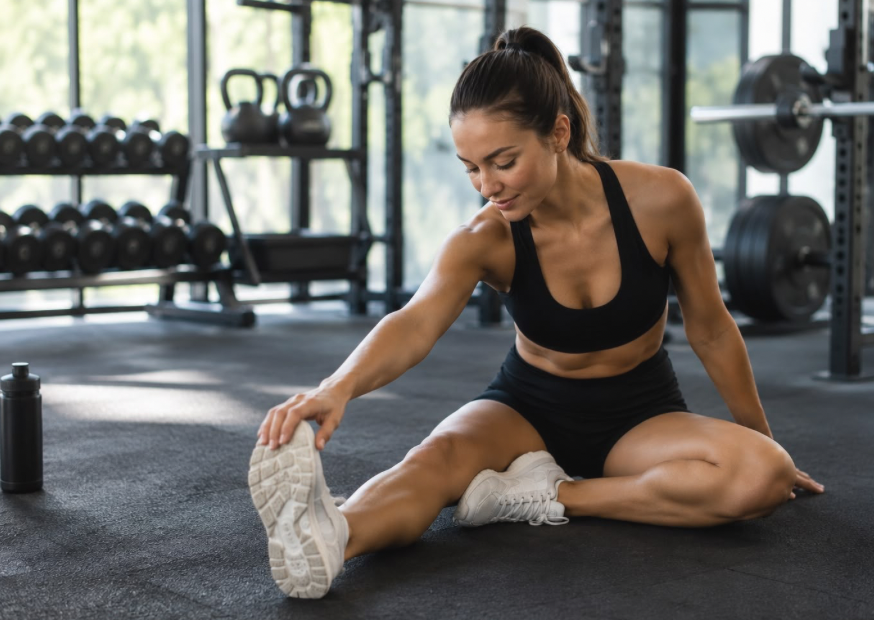
Stretching is an important part of many exercise programmes. It can help maintain flexibility, support recovery and reduce feelings of stiffness. However, while stretching and yoga share some similarities, they are not the same thing.
Yoga is a holistic practice that combines movement, strength, mobility, balance, breathing and mindfulness. Rather than simply focusing on lengthening muscles, it encourages you to become more aware of how your body moves, how it feels and how your breath influences that movement.
Research comparing yoga with other forms of exercise suggests that, while yoga can provide similar improvements in flexibility and physical fitness, it may also offer additional benefits for balance, stress management, mood and overall wellbeing through its integration of movement, breath and mindful awareness.
Yoga builds body awareness
One of the greatest differences between stretching and yoga is awareness.
In yoga, we’re not simply trying to achieve a particular shape. Instead, we’re paying attention to how we move and how our body feels throughout each posture.
As you practise, you begin to notice things such as:
- Is my weight evenly distributed?
- Am I gripping muscles that don’t need to work?
- Can I soften my shoulders?
- Is my pelvis in a comfortable, neutral position?
- How steady is my breathing?
- Does this movement feel supported or am I compensating elsewhere?
This awareness is closely linked to two important concepts.
Proprioception is your awareness of where your body is in space.
Interoception is your awareness of what is happening within your body, such as your breathing, muscle tension and internal sensations.
These skills are important for balance, coordination and efficient movement. Research suggests that regular yoga practice may improve balance, functional movement and body awareness, which can support everyday activities as well as sporting performance.
Many people can copy a posture. Yoga teaches you to understand what your body is doing while you’re there.
Every posture has a purpose
When you stretch after exercise, it’s often a collection of individual stretches targeting different muscles.
Yoga, however, is intentionally sequenced.
Each posture prepares your body for the next, gradually improving mobility, stability and strength.
For example, a class may:
- Mobilise the spine before deeper movements.
- Open the hips before seated postures.
- Lengthen the calves and hamstrings before forward folds.
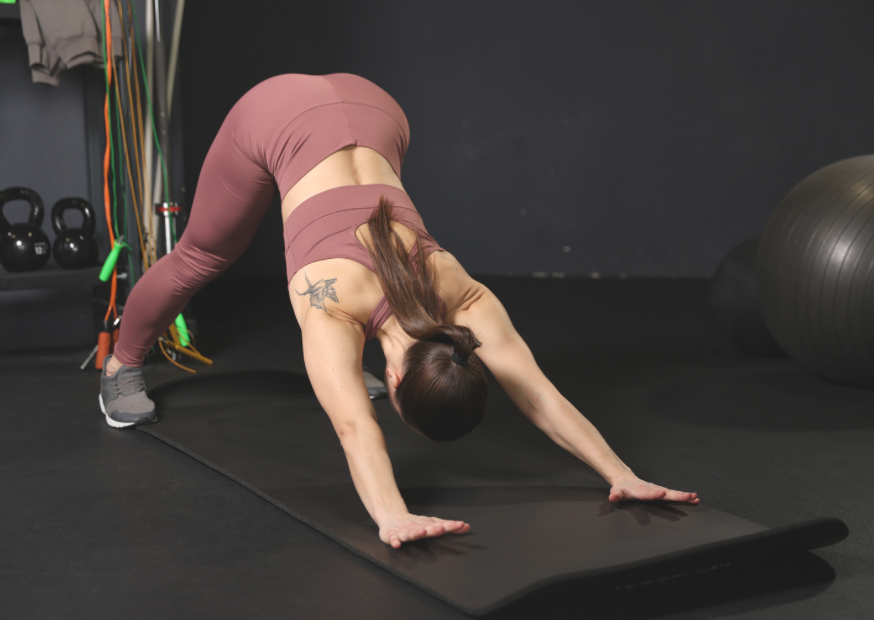
- Build shoulder stability before Downward Dog.
- Activate the core before balance postures.
Rather than forcing your body into a position, yoga works progressively with your body, respecting where you are today while helping you develop over time.
Yoga isn’t just about holding a stretch
Another important difference is how we move.
In yoga, we don’t simply arrive in a posture and hold it. We learn to move into a posture with control, explore it with awareness and move out of it just as mindfully.
These transitions are just as important as the posture itself.
Moving in this way helps develop:
- Strength throughout a range of movement.
- Coordination.
- Balance.
- Joint stability.
- Confidence in how your body moves.
This is one of the reasons yoga develops mobility rather than simply flexibility.
Alignment matters
Two people may appear to be performing exactly the same posture, yet their bodies may be working very differently.
Good alignment isn’t about creating the “perfect” pose or making everyone look identical. Every body is unique, and posture should always be adapted to the individual.
Instead, alignment helps your body move as efficiently, safely and comfortably as possible.
Appropriate alignment can:
- Encourage the intended muscles to work.
- Reduce unnecessary strain on joints.
- Improve stability and balance.
- Help distribute load more evenly.
- Make each posture feel stronger and more comfortable.
This is why the verbal cues from a yoga teacher can make such a difference. A small adjustment in your foot position, pelvis or shoulders can completely change how a posture feels.
The breath is part of the practice
Many people remember to take a deep breath during a stretch because they’ve been told to.
In yoga, the breath becomes part of the movement itself.
Rather than simply breathing through an exercise, we learn to use the breath intentionally to support movement and create awareness.
Breath awareness can help:
- Reduce unnecessary muscle tension.
- Improve concentration.
- Support smoother, more controlled movement.
- Encourage relaxation.
- Help regulate the autonomic nervous system.
Research suggests that slower, controlled breathing techniques used in yoga may stimulate the parasympathetic (“rest and digest”) branch of the nervous system, helping the body shift away from a prolonged stress response.
Often, the breath tells us as much as the posture does. If we’re holding our breath or breathing shallowly, it can be a sign that we’re pushing beyond what our body is comfortable with.
Yoga develops strength as well as flexibility
One of the biggest misconceptions about yoga is that it’s “just stretching.”
In reality, yoga challenges many aspects of physical fitness, including:
- Strength
- Balance
- Mobility
- Stability
- Coordination
- Muscular endurance
This is where it’s useful to understand the difference between flexibility and mobility.
Flexibility is the ability of a muscle to lengthen.
Mobility is your ability to actively move through a range of motion with strength, stability and control.
You may be able to touch your toes, but can you balance on one leg? Can you comfortably reach overhead? Can you move from sitting to standing with ease?
Yoga helps develop movement that is not only flexible, but also strong, stable and controlled.
You don’t need an hour
Another common myth is that yoga only “counts” if you attend a 60- or 90-minute class.
While longer sessions certainly have their place, even 10–15 minutes of mindful practice can make a real difference, which can easily find a place in your gym routine
A short practice can help to:
- Ease stiffness after sitting for long periods.
- Improve mobility.
- Reduce tension.
- Support relaxation.
- Reconnect you with your body.
Like any form of exercise, consistency is often more beneficial than duration. A few minutes practised regularly can have a greater impact than an occasional long session.
It’s about connection, not perfection
Perhaps the greatest difference between stretching and yoga is intention.
Stretching often focuses on lengthening muscles.
Yoga invites you to become curious about your body, your breath and the way you move.
It encourages you to slow down, notice movement patterns, build strength where it’s needed, create space where there’s tension and move with greater confidence and awareness.
Whether you’re an experienced runner, a gym enthusiast, someone returning to exercise or simply looking to move more comfortably in everyday life, yoga offers benefits that extend well beyond flexibility.
So next time you roll out your mat, ask yourself:
Are you simply moving your body… or are you really connecting with it?
⸻
Further Reading & Research
- Cramer H, Lauche R, Langhorst J, Dobos G. (2017). Yoga for improving health-related quality of life, mental health and cancer-related symptoms in women diagnosed with breast cancer. Cochrane Database of Systematic Reviews.
- Ross A, Thomas S. (2010). The Health Benefits of Yoga and Exercise: A Review of Comparison Studies. Journal of Alternative and Complementary Medicine.
- Youkhana S, Dean CM, Wolff M, Sherrington C, Tiedemann A. (2016). Yoga-based exercise improves balance and mobility in older adults: A systematic review and meta-analysis. Age and Ageing.
- Streeter CC, Gerbarg PL, Saper RB, Ciraulo DA, Brown RP. (2012). Effects of Yoga on the Autonomic Nervous System, Gamma-Aminobutyric Acid, and Allostasis in Epilepsy, Depression and PTSD. Medical Hypotheses.
- Jerath R, Edry JW, Barnes VA, Jerath V. (2006). Physiology of Long Pranayamic Breathing: Neural Respiratory Elements May Provide a Mechanism That Explains How Slow Deep Breathing Shifts the Autonomic Nervous System. Medical Hypotheses.
- Patel NK et al. (2012). The Effects of Yoga on Physical Function and Health-Related Quality of Life in Older Adults.
Yoga classes in Exeter, book here
My yoga classes run in themes for five weeks. This allows for people to put in place adaptions to suit their body and learn the different options of each yoga flow that are right for them. After the five weeks you will find each yoga flow published on my blog, with a free interactive copy. You will find the yoga class for this theme below.
Want to try one of my yoga classes?
I run yoga classes in Exeter- Exminster & Topsham, Devon
My Exeter based yoga classes are suitable for most levels of yogis. There are flowing sequences, often using sun salutations and vinyasa to warm the body and move through the yoga postures.
The yoga classes include an element of all styles of yoga, to bring a fresh angle to yoga and will encourage the use of yoga props in a fun and informal environment to help you explore your practice. My styles include Hatha Yoga, Vinyasa Yoga, Flow Yoga, Yin Yoga & Restorative Yoga.
Variations to yoga postures will be given throughout the class allowing each person to adapt the class to their personal level of yoga practice. All equipment is provided.
Classes are available at Kiva & Zen Studios in Topsham, Exeter, Victory Hall in Exminster, Exeter.
Book a yoga class today and immerse yourself in the tranquil atmosphere of my Exeter yoga venues, while rejuvenating your mind and body through the practice of yoga.
Each session is designed to help you connect with your inner self, cultivate mindfulness, and improve flexibility, strength, and balance. Whether you're a beginner to yoga or an experienced practitioner, there's a class for you in my Exeter venues.
As a Yoga Teacher, I underwent my initial yoga training in India and am both qualified and registered with the Yoga Alliance. Since completing my initial yoga qualification, I have undertaken further yoga studies both here in Exeter and in locations around Europe.
Book your yoga classes in Exeter