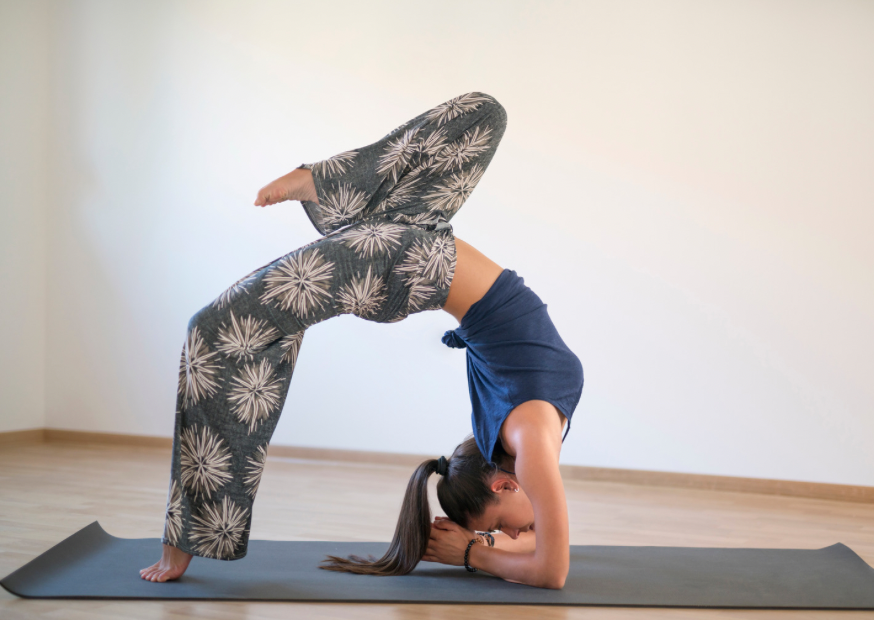
Does Yoga Build Strength?
The short answer is yes, yoga absolutely builds strength.
However, the type of strength developed through yoga can look a little different to the strength associated with lifting weights or spending time in the gym. Rather than simply focusing on how much weight you can move, yoga develops strength that supports the way you move, breathe and function in everyday life.
Strength is More Than Muscle Size
When we think about strength, many of us immediately think about bigger muscles. While muscle size can contribute to strength, it is only one piece of the puzzle.
One of the first ways the body becomes stronger is through improvements in the communication between the brain, nervous system and muscles. This is known as neuromuscular adaptation.
Essentially, your body becomes better at recruiting the muscles needed for a movement, coordinating them more efficiently and switching on stabilising muscles at the right time.
You could think of it as improving the quality of the instructions being sent from the brain to the muscles.
This is one of the reasons people often feel stronger, steadier and more capable within weeks of starting yoga, even before any noticeable changes in muscle size occur.
How Yoga Builds Strength
Yoga develops strength in a unique way by combining movement, breath and body awareness.
Many yoga postures require muscles to work isometrically, meaning the muscles are contracting and producing force without changing length significantly. Holding a plank, warrior pose or chair pose may not involve lifting a weight, but your muscles are still working hard to support and stabilise your body.
Regular practice can improve:
- Core strength and stability.
- Shoulder strength and resilience.
- Hip and glute strength.
- Balance and single-leg stability.
- Postural strength.
- Joint stability and control.
- Coordination between muscle groups.
Rather than isolating one muscle at a time, yoga often asks the body to work as an integrated system.
Emerging research also suggests that yoga improves neuromuscular performance, essentially how effectively the brain and muscles communicate with one another. Improvements in movement quality, coordination, balance and functional strength have been demonstrated after structured yoga programmes, even when practised only once per week.
Functional Strength for Everyday Life
One of the greatest strengths of yoga is that it develops what is often called functional strength.
This is the strength that helps you carry shopping, lift children or grandchildren, climb stairs, garden, hike, improve posture at your desk or move confidently as you get older.
Yoga teaches the body to produce strength while balancing, twisting, reaching, bending and breathing.
In real life, our bodies rarely move in perfectly straight lines or in isolated movements. Yoga reflects this beautifully.
Research supports what many yoga practitioners experience in practice. Studies have shown that regular yoga practice can improve muscle strength, balance, mobility and lower body flexibility, particularly in adults in their 60s and 70s practising for as little as 9–12 weeks. Researchers concluded that yoga can be a valuable multimodal activity for improving physical function and supporting healthy ageing.
Strength Through Stability
Many people are surprised by how challenging slower yoga practices can feel.
Holding a posture for several breaths gives the body time to recruit deeper stabilising muscles that are often missed during faster movements.
These smaller muscles play an important role in supporting our joints and improving movement quality.
For athletes, this can help improve efficiency and reduce compensatory movement patterns.
For those experiencing aches and pains, improving stability can often help the body move with greater ease and confidence.
Strength and Mobility Work Together
Yoga also develops strength through range of movement.
Being flexible without strength and control can leave joints feeling unsupported. Equally, being strong without mobility can limit movement options and increase stiffness.
Yoga aims to build both together.
This is why many postures can feel both strengthening and stretching at the same time.
Developing strength at the end ranges of movement can improve joint resilience, balance and overall movement capacity.
Can Yoga Build Muscle?
The answer is yes, to a degree.
Beginners often gain muscle strength and some muscle mass when they begin practising yoga regularly, particularly if they were previously inactive.
More physically demanding styles such as Vinyasa, Power Yoga and Ashtanga can also provide enough challenge to stimulate muscle growth.
However, if the goal is to maximise muscle size or develop high levels of absolute strength, progressive resistance training is generally more effective.
This does not mean yoga is inferior, it simply means it excels in different areas.
What Complements Yoga for Strength?
Yoga works incredibly well alongside other forms of training.
Resistance training can help increase muscle mass, bone density and maximal strength.
Walking, running and cardiovascular exercise support heart health and endurance.
Sports-specific training develops performance for particular activities.
Yoga can complement all of these by improving mobility, body awareness, recovery, balance, breathing efficiency and movement quality.
Many athletes find that yoga helps them move better, recover more effectively and maintain consistency in their training.
Equally, those who primarily practise yoga may benefit from adding some resistance training to support muscle mass and bone health, particularly as we age.
Whilst yoga can contribute to strength development and may stimulate some muscle growth, particularly in beginners or previously inactive individuals, progressive resistance training remains the most effective method for increasing muscle mass and maximising absolute strength. Rather than competing with one another, yoga and resistance training often work exceptionally well together.
Yoga builds strength.
It develops strength that is useful, adaptable and transferable to everyday life.
It improves stability, coordination, balance and body awareness while teaching the body to move efficiently and with control.
It may not replace every other form of exercise, just as no single form of exercise can provide everything we need.
Instead, yoga offers a valuable piece of the puzzle, helping us build a body that is not only stronger, but moves and feels better too.
Yoga classes in Exeter, book here
My yoga classes run in themes for five weeks. This allows for people to put in place adaptions to suit their body and learn the different options of each yoga flow that are right for them. After the five weeks you will find each yoga flow published on my blog, with a free interactive copy. You will find the yoga class for this theme below.
Want to try one of my yoga classes?
I run yoga classes in Exeter- Exminster & Topsham, Devon
My Exeter based yoga classes are suitable for most levels of yogis. There are flowing sequences, often using sun salutations and vinyasa to warm the body and move through the yoga postures.
The yoga classes include an element of all styles of yoga, to bring a fresh angle to yoga and will encourage the use of yoga props in a fun and informal environment to help you explore your practice. My styles include Hatha Yoga, Vinyasa Yoga, Flow Yoga, Yin Yoga & Restorative Yoga.
Variations to yoga postures will be given throughout the class allowing each person to adapt the class to their personal level of yoga practice. All equipment is provided.
Classes are available at Kiva & Zen Studios in Topsham, Exeter, Victory Hall in Exminster, Exeter.
Book a yoga class today and immerse yourself in the tranquil atmosphere of my Exeter yoga venues, while rejuvenating your mind and body through the practice of yoga.
Each session is designed to help you connect with your inner self, cultivate mindfulness, and improve flexibility, strength, and balance. Whether you're a beginner to yoga or an experienced practitioner, there's a class for you in my Exeter venues.
As a Yoga Teacher, I underwent my initial yoga training in India and am both qualified and registered with the Yoga Alliance. Since completing my initial yoga qualification, I have undertaken further yoga studies both here in Exeter and in locations around Europe.